


تريد قلب قوي صحي ؟ حاول إنقاص الوزن والحفاظ على التغذية من الآن!
-
 2021-06-18
-
LEPU



خلال السنوات القليلة الماضية ، أدى التوسع الحضري السريع والتصنيع في آسيا إلى ارتفاع معدلات السمنة في المنطقة ، وخاصة بين الشباب في البلدان المنخفضة والمتوسطة الدخل. Obesity is a known risk factor for cardiovascular disease and heart failure. Although obese people are normally defined as having a BMI greater or equal to 30 by WHO, it's highly heterogeneous.
In metabolically unhealthy individuals, obesity coexists with a variety of comorbidities, such as hypertension, diabetes, dyslipidemia, and sleep apnea, which seriously affects the health of the heart and all other organs of the body, including cardiac remodeling, myocardial dysfunction, ejection fraction retention HF, and coronary artery disease. Malnutrition, on the other hand, refers to any nutritional imbalance that leads to undernourishment or over-nourishment. WHO stresses that the "double burden of malnutrition" - characterized by undernourished people and those who are obese or suffering from diet-related non-communicable diseases - is a real and growing global health challenge.
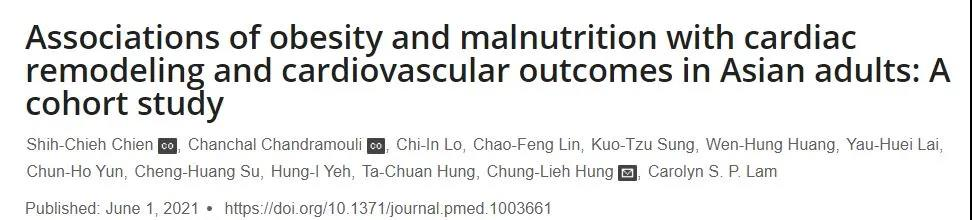
Serum albumin (SA) and prognostic nutrition index (PNI) are proxies of nutritional status and have been shown to have prognostic effects on multiple CVDS outcomes, especially HF(Heart Failure). الـ researchers studied 5,300 asymptomatic Asian participants (mean age 49.6±11.4 years; 64.8% were male) who were continuously enrolled in a cardiovascular health screening program between June 2009 and December 2012. Clinical and echocardiographic characteristics of the participants were described and stratified by a comprehensive subgroup of obesity and nutritional status. Obesity was based on the Asian BMI dividing line recommended by WHO (low ≤25 kg/m2; High & gt; 25 kg/m2). Nutritional status is defined primarily by the SA, followed by the PNI and Global Malnutrition Leadership Initiative (GLIM) standards.

الـ final cohort consisted of 2096 (39.0%) lean -- well nourished (low BMI, high SA), 1369 (25.8%) obese -- well nourished (high BMI, high SA), and 1154 (21.8%) lean -- ill nourished (low BMI, low SA), And 681 participants (12.8%) who were obesity-undernourished (high BMI, low SA). Compared with all other subgroups, the obesity-malnourish participants were older on average (54.5±11.4 years), more of them are women (41%), had a higher mean waist circumfeرينس (91.7±8.8cm) and the highest percentage of body fat (32%), and had the highest incidence of hypertension (32%), diabetes (12%), and CVD (11%).
هناك نقص في الأبحاث حول الآثار المشتركة للسمنة وسوء التغذية على نتائج القلب لدى الناس. To investigate the relationship between obesity and nutritional status and clinical characteristics, echocardiographic changes, and clinical outcomes in the general community, eXperts من وحدة العناية المركزة في تايوان أجريت دراسة نشرت في العدد الأخير من الطب PLoS. At a median follow-up of 3.6 years, the lean-well-nourished group, as a refeرينس, had the highest overall disease risk, followed by the lean-well-nourished group and the obesity-well-nourished group. الـ results were similar when other anthropometric indices (waist circumfeرينس and body fat) and other measures of nutritional status (the PNI and GLIM criteria) were used.
In summary, obese individuals with poor nutritional status have the highest burden of heart complications and the most adverse overall outcomes. To have a healthy heart, try to be a well-nourished thin شخص!
استكشاف Cardiovasculorsolutions Lepu:https://en.lepumedical.com/products/cardiovascular-products/
ريفرينس:Associations of obesity and malnutrition with cardiac remodeling and cardiovascular outcomes in Asian adults: A cohort study. https://doi.org/10.1371/journal.pmed.1003661